
Do you know your Myers-Briggs type?
Odds are, if you are reading this, you have come across the Myers-Briggs Type Indicator at least once or twice. Maybe your university signed you up to take the test to help you choose your major? Or maybe in a journey of self-discovery you found yourself deep in subreddits trying to confirm your “perfect type” ? Whatever the circumstances that lead you to this specific personality assessment, it is very possible that you have made one of these five mistakes when self-typing.
Mistake One: You only took one Myers-Briggs test

If you were coerced into taking the Myers-Briggs Type Indicator for a class, employer, or career seminar, it is very likely that you only took the assessment one time. From whatever link you were forwarded (hopefully not to 16Personalities), you probably considered that the results were accurate enough and told everyone you were an “INFP! Whatever that means…”
Given the long arm of the internet, there are dozens of Myers-Briggs tests out there (both free and pricey) with varying degrees of accuracy. Considering that the original Myers-Briggs Type Indicator was created by a mother-daughter team defining the psychological theories of Carl Jung, it is no surprise that online quizzes give a wide variety of results since most are a test off of a test off of a test.
Like money or parenting, personality tests are neutral with the potential for positive or negative outcomes. In order to get a truly accurate result (with Myers-Briggs or the Enneagram or any other personality assessment), it takes multiple tests, reading, researching, and talking with other people in order to truly settle on your true type.
Even though finding your true type does take work, the payoff is priceless once you get there. But if you don’t currently have the time or energy to “read all about it!” at least take away this: odds are very high that your first Myers-Briggs test results were inaccurate.
Mistake Two: You think introvert = shy and extrovert = outgoing

One of the most common misconceptions about personality types revolves around this belief: introverts are shy, timid, and withdrawn and extroverts are bold, loud, and outgoing.
Are these stereotypes? Yes. Are these descriptions partially true? Definitely. Are these words synonymous and interchangeable? No.
Being an introvert or an extrovert does not describe how you act in the world, it describes how you are oriented to the world.
Introverts consider their internal, invisible, personal world as the “real world.” They gain their energy from alone time and will feel more recharged after spending time away from people, experiences, and things. If a new conversation or person comes their way, they bring it back to their internal map to form an opinion on that thing or an action from that experience. Their internal world is their compass and their primary “residence.”
Extroverts consider their external, visible, touchable world as the “real world.” They gain their energy from external stimuli (not necessarily people, but anything outside of themselves: thoughts, ideas, actions, experiences, etc). These types consult their internal map after they have already made the decision or absorbed the information outside of themselves. Live first, think second is usually how extroverts operate. Their external world is their compass and their primary “residence.”
Most people mix up introversion and extroversion by misreading their needs. Humans, by nature, tend to notice what they lack rather than what they have. Everyone needs a balance between introversion and extroversion, we do not exclusively use one or the other. In a hypothetical scenario: an extrovert who spends 80% of their day in the world of people and “needs” 20% of that same day alone is a very typical situation and does not make that person an introvert. Needing time alone is universal.
A good experiment to gauge if you are an introvert or an extrovert is to dedicate an entire week to introvert activities and another week to extrovert activities. During your introverted week, spend all your free time reading books, writing, engaging in solo sports, playing video games, going out in nature, etc. During your extroverted week, spend all your free time with friends, socializing, having conversations, taking in new experiences, knocking things off the bucket list, doing something a little risky. Depending on how introverted or extroverted your job is by nature, you may have to take a break from it to feel the full effect of the experiment.
Maybe from the description above you already 100% know which you prefer. That’s great! But maybe you’ll need a little feast and famine experiment to get to know yourself. Whatever the case, the knowledge is worth the effort because on the other side you will know which activities make you come alive and which activities drain you.
Mistake Three: You believe one letter preference completely excludes the other
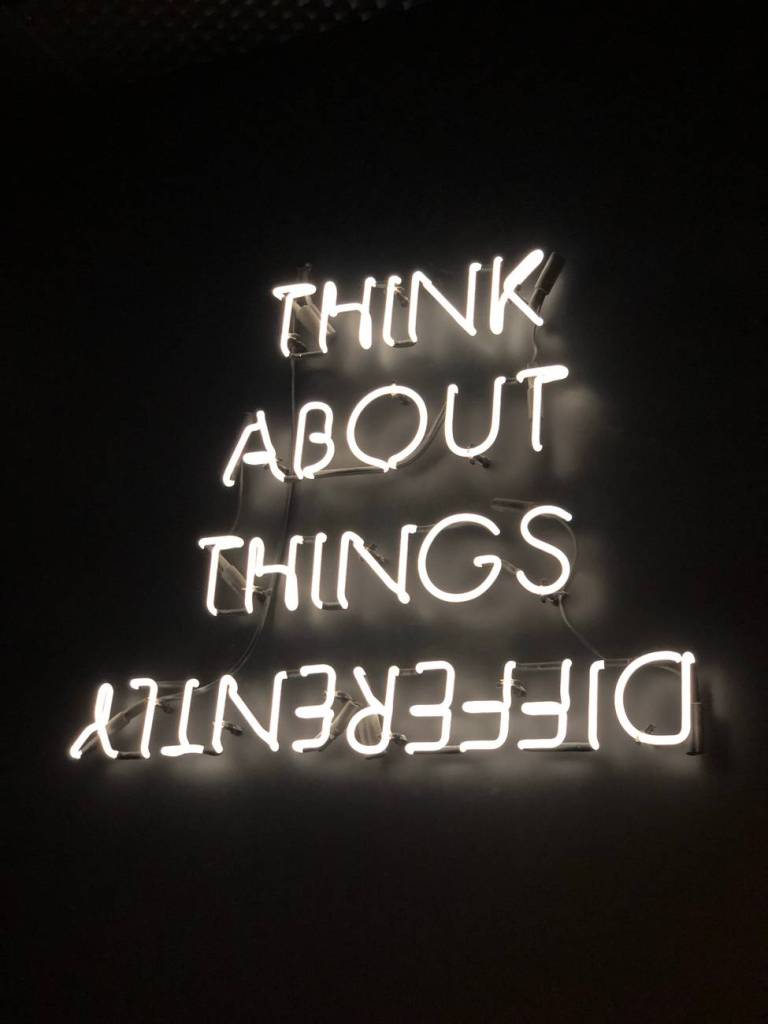
A very common mistake when first introduced to Myers-Briggs is believing that the dichotomies are mutually exclusive.
Myth: I am a thinker so I am not a feeler.
Truth: I prefer “thinking” over “feeling” but I use both head and heart to make decisions.
Humans are incredibly intelligent, well-rounded creatures. One major reason so many people are turned off by personality assessments is the belief that a title like “ISFJ” will put them in a box when they know clearly that they are capable of making different decisions given different circumstances on different days.
The Myers-Briggs Type Indicator was designed by Katharine Briggs and Isabel Briggs-Myers to be a road map not the final destination. The dichotomies point toward something deeper: cognitive functions.
Without getting into the ins-and-outs of the cognitive-function-rabbit-hole, long story short is that your hunch is true: you are both introverted and extroverted, intuitive and sensing, thinking and feeling, judging and perceiving — all wrapped in one.
Mistake Four: You start comparing yourself to someone with the same type

Comparison is natural. Almost like breathing, humans will subconsciously size themselves up to the person next to them. But where Myers-Briggs is concerned, comparison can be detrimental.
Even though we want to have that unified “TWINS!” moment with our friends and family of the same type, if you compare traits too soon it might get confusing and even make you doubt the validity of personality tests in general. “We’re nothing alike…” is usually the reaction after playing the personality comparison game. But here are a few things that can make you seem extremely different from someone you are comparing yourself with:
- One of you tested inaccurately
- One of you is further along in personal development
- One of you is in a season of intense stress or mental health struggles causing that person to be in a dominant-tertiary loop or in the grip of their inferior function
- Different Enneagram types impact expression and prioritization of similar traits
- Different childhood experiences impact what you consider acceptable social behavior
Those are just a few things that can make one type appear much different from someone of the same type. The best approach is to take your results and their results with a grain of salt and get to know them with an open mind.
Mistake Five: You avoid looking into the cognitive functions

Cognitive functions research is often considered the “extra credit” of Myers-Briggs homework, but really it is the bread and butter of this entire personality assessment system. To truly understand and solidify your type, going this extra mile is going to confirm it for you beyond a shadow of a doubt. If you ache to be understood and to understand others better, consider reading the Myers-Briggs Introduction page on this website for a brief overview.
If you have read this far and have made one (or all five!) of these mistakes, you are not alone. If self-development is something you’re seeking, take advantage of the growing number of Personality City resources on this website and on social channels. Keep digging!
 Personality City
It’s well said about the real worlds of introverts and extroverts, it made these concepts a little more clear. Thank you!
LikeLike
Thank you so much mentioning that! So glad that breakdown was helpful!
LikeLike