


There is nothing more beautiful than someone who goes out of their way to make life beautiful for others.
mandy hale
Overview of T.W.O.
“The Helper” is a caring type known for their people-pleasing tendencies and strong desire to be loved. They are friendly, self-sacrificing, and at their best: altruistic.
- Strengths: selfless, sincere, empathetic.
- Weaknesses: possessive, needy, attached.
- Basic Desires: love and connection.
- Basic Fears: being unwanted and unworthy.
Center of Intelligence: Heart
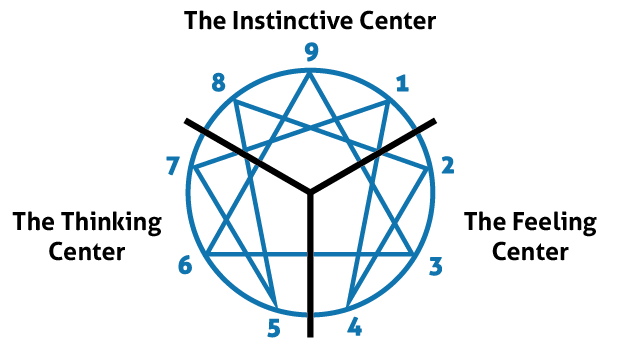
Enneagram Twos are located in the Feeling Center. This means they have the great potential to be very receptive and have authentic hearts. Twos move through life with their heart as their guide. They are concerned with image, seek attention, and emotionally struggle with shame. Twos, in particular, like to focus their feelings externally to avoid feeling shame.
Adjacent Wings: 2w1 and 2w3
Wings play a major role in expressing type diversity within the Enneagram. Wings can only be adjacent to the dominant type, so an Enneagram Two can have a one-wing or a three-wing based on its position in the Enneagram.
Two wing One
Twos with a One-wing display purposeful, reserved, and care-taking tendencies. 2w1’s can be found serving others and embracing humility. These types have an acute awareness of their personal growth and will focus on the present task at hand. Strengths include offering guidance to other types, recognizing what job needs to be done or which person needs comforting, and serving those around them with exceptionally high standards. Weaknesses include fishing for complements or praise (feeling like they need the validation), ignoring their own needs for the needs of others (like most Twos), and taking honest criticism too personally.
Two wing Three
Twos with a Three-wing display sociable, selfless, and upbeat tendencies. 2w3’s love people and want to be liked. They are accomplished individuals who enjoy meeting new people. These types need to be accepted socially and enjoy pursuits which satisfy their duel need for success and connection. Strengths include having an optimistic view of their world, communicating well, adapting to a wide variety of situations, and passion for the people in their life. Weaknesses include taking criticism and feedback too much to heart, scrutinizing themselves when under stress or unexpected pressure, and overlooking their own needs for the needs of others.
Directions of Growth and Stress
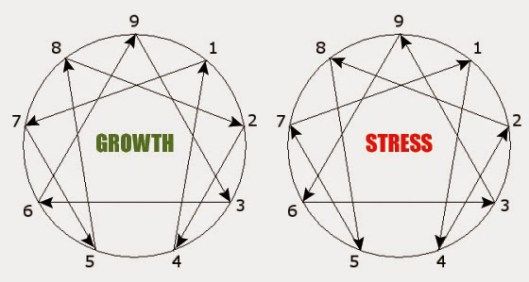
Direction of Growth (Integration)
When an Enneagram Two is moving in a direction of personal growth they go toward an Enneagram Four. This means that they will act more independent and need less validation, they may embrace their creative or artistic side, and they begin to connect more deeply to their inner emotions.
Direction of Stress (Disintegration)
When an Enneagram Two is moving in the direction of stress they go toward Enneagram Eight. This means that they will become more aggressive and domineering. The more stressed they become, the more a docile Two will start to act out as furious and impatient.
The Stances: Dependent
In times of conflict, Enneagram Twos assume a Dependent Stance (there are three potential conflict stances within the Enneagram). This means that they will refer to other people when they have exhausted their own personal resources. In the Dependent Stance, Enneagram Twos are concerned with connecting people, finding links between various circumstances, and are troubled by boundaries.
The Subtypes
The three instincts of the Enneagram, also called the subtypes, are basic instincts present in every human being. Although all three exist in the body, one will be a driving force.
Self-Preservation Twos
Self-Preservation types, in general, are concerned with safety, comfort, and getting their physical needs met. Self-pres Twos tend to take care of other people’s needs and expect the same comfort, safety, and care in return. If this unconscious quid pro quo is not communicated, it can morph into a sense of entitlement. If they continue giving to others without receiving the same attention back, Self-pres Twos will start to feel unstable and lacking.
Intimate Twos
Intimate types, in general, are concerned with one-on-one connection and depth. Sx Twos desire connection with specific people in their life. Their hearts beat for one-on-one conversations and experiences and as a result may be very warm and inviting not only in their speech but also in their body language. These types are passionate and more strong-willed than other Enneagram Twos. They are highly engaged in close relationships and may feel intensely hurt if other people set boundaries with them.
Social Twos
Social types, in general, are concerned with their social standing and whether or not they are accepted by the tribe. Soc Twos will do what they can to be accepted by a social circle or an organization to the extent that they become a vital part of that group. These types focus on creating allies and the more connections they have the more safe they feel. Soc Twos are ambitious, influential, and will often stand out in a crowd.
 Personality City