



Perhaps home is not a place but simply an irrevocable condition.
James Baldwin
Overview of S.I.X.
“The Loyalist” is a supportive, security-oriented type known for their conscientious nature. These types are future-thinkers and often foresee (and prepare) for problems before they arise. They are reliable, committed, and prone to anxiety.
- Strengths: commitment, stability, self-reliance.
- Weaknesses: anxiety, self-doubt, suspicion.
- Basic Desires: being safe and prepared for anything.
- Basic Fears: losing support and feeling vulnerable.
Center of Intelligence: Head

Enneagram Sixes are located in the Thinking Center. This means they have the great potential to have a balanced and trusting mind. Sixes use their head to make decisions and prepare for anything. They are concerned with strategies, seek stability, and emotionally struggle with fear. Sixes, in particular, struggle with anxiety and mentally play out worse-case scenarios.
Adjacent Wings: 6w5 and 6w7
Wings play a major role in expressing type diversity within the Enneagram. Wings can only be adjacent to the dominant type, so an Enneagram Six can have a five-wing or a seven-wing based on its position in the Enneagram.
Six wing five
Sixes with a Five-wing display cautionary, guarded, and knowledgeable tendencies. 6w5’s will protect themselves and their relationships religiously. They fear losing their stability and are distrustful of things that could threaten their current situation. Strengths include being great problem-solvers, engaging in intellectual pursuits, and noticing details. Weaknesses include withdrawing from social circles, being skeptical of their world, and projecting their feelings on to others.
Six wing seven
Sixes with a Seven wing display hard-working, people-loving tendencies. 6w7’s enjoy being supportive of others and care deeply about people. They can be trusted to honor their commitments and are naturally sociable. Strengths include being trustworthy, following things through (especially if it’s something they care about), and being warm to the people around them. Weaknesses include doubting themselves, expressing their emotions fully, and making decisions.
Directions of Growth and Stress
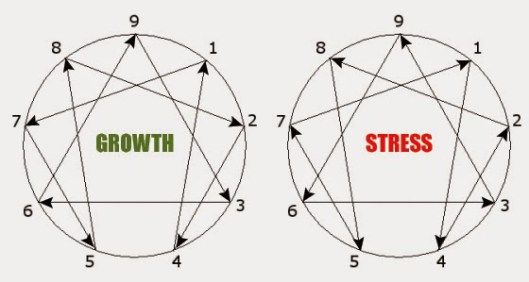
Direction of Growth (Integration)
When an Enneagram Six is moving in a direction of personal growth they go toward an Enneagram Nine. This means they will become more calm and optimistic as they move toward Nine. Their focus will shift from being anxious and fearful to accepting their circumstances and relaxing.
Direction of Stress (Disintegration)
When an Enneagram Six is moving in a direction of stress they go toward Enneagram Three. The usually cooperative and dutiful Six will become more rebellious and competitive at Three. Their focus will gradually shift from being humble and responsible to being arrogant and needing recognition for their accomplishments.
The Stances: Dependent
In times of conflict, Enneagram Sixes assume a Dependent Stance (there are three potential conflict stances within the Enneagram). This means that they will refer to other people when they have exhausted their own personal resources. In the Dependent Stance, Enneagram Sixes are considering what needs to be done next, they might make false connections, and they reference other people when making decisions.
The Subtypes
The three instincts of the Enneagram, also called the subtypes, are basic instincts present in every human being. Although all three exist in the body, one will be a driving force.
Self-Preservation Sixes
Self-Preservation types, in general, are concerned with safety, comfort, and getting their physical needs met. Self-pres Sixes are very cautious types who try to secure their own personal safety. They build strong relationships with others in order to preserve their stability and they are very skilled at diversifying their alliances. These types try to avoid stepping toes and often come across as warm and inviting.
Intimate Sixes
Intimate types, in general, are concerned with one-on-one connection and depth. Sx Sixes want to overcome their anxiety with strength and willpower and often assume an offensive position to meet their needs. Intimate types embrace intensity and this passion will make it difficult for an sx Six to feel vulnerable or exposed. They often take the bull by the horns and go directly after what they want.
Social Sixes
Social types, in general, are concerned with their social standing and whether or not they are accepted by the tribe. Soc Sixes want to follow social rules and often champion a cause they believe in. This need for safety is wrapped up in a desire for social acceptance and building a better future for everyone to share. Soc Sixes prize healthy communication and work to set clear, mutual boundaries within their relationships.
 Personality City